
What exactly does “Margin Level” mean?
The Margin Level is a percentage (%) figure calculated by dividing the amount of Equity by the amount of Used Margin. Margin Level tells you how much of your money is accessible for new deals. The higher your Margin Level, the more Free Margin you have to trade with.
The lower the Margin Level, the less Free Margin available to trade, which could lead to disastrous consequences… similar to a Margin Call or a Stop Out
How to Calculate Margin Level
Here’s how to calculate Margin Level::
Margin Level = (Equity / Used Margin) x 100%
Your Margin Level will be calculated and displayed automatically by your trading platform.
If you have no open trades, your Margin Level will be ZERO.
The margin level is critical. Margin levels are used by forex brokers to decide if you can establish new trades.
Margin Level limitations vary by broker, although the majority of brokers put this maximum at 100%.
This means that you will be unable to create new positions if your Equity is equal to or less than your Used Margin.
If you want to open new positions, you must first close existing ones.
Example #1: Open a long USD/JPY position with 1 mini lot
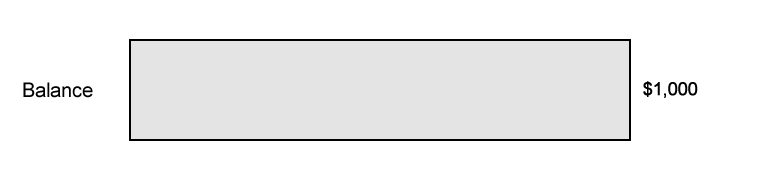
Assume you have a $1,000 account balance.
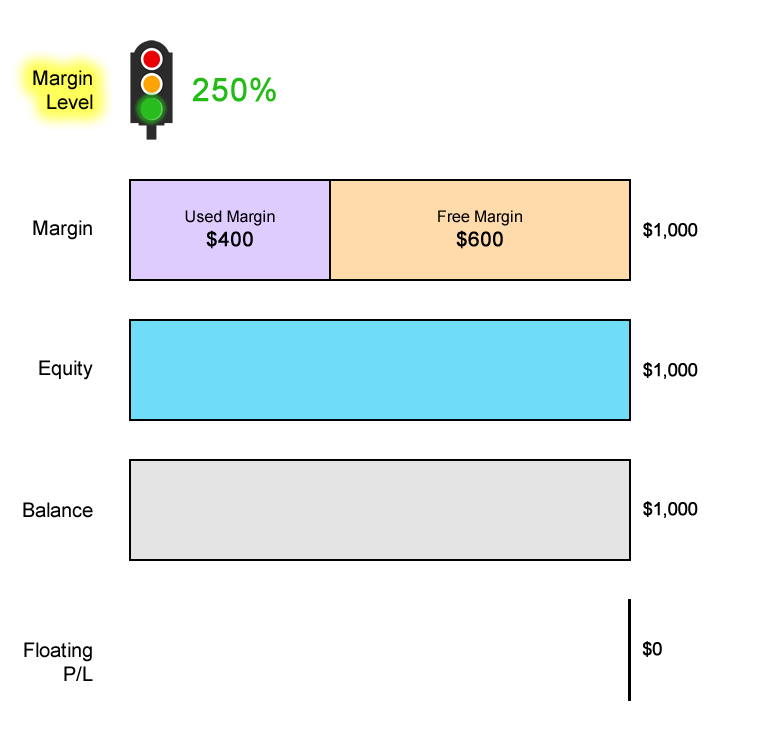
Step 1: Calculate Required Margin
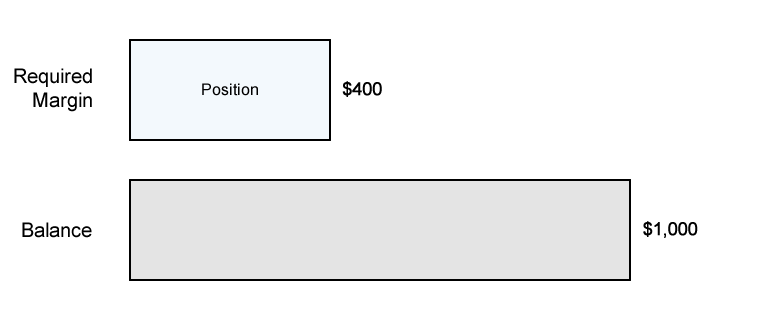
Assume you have a $ account balance and wish to go long USD/JPY with a position size of 1 mini lot (10,000 units). The required margin is 4%.
How much margin will you need to open the position (Required Margin)?
Because the USD is the foundation currency. This tiny lot is $10,000, hence the position’s Notional Value is $10,000. 1,000.
Required Margin = Notional Value x Margin Requirement
$400 = $10,000 x .04
Assuming your trading account is in USD, the Required Margin will be $400 because the Margin Requirement is 4%.
Step 2: Calculate Used Margin
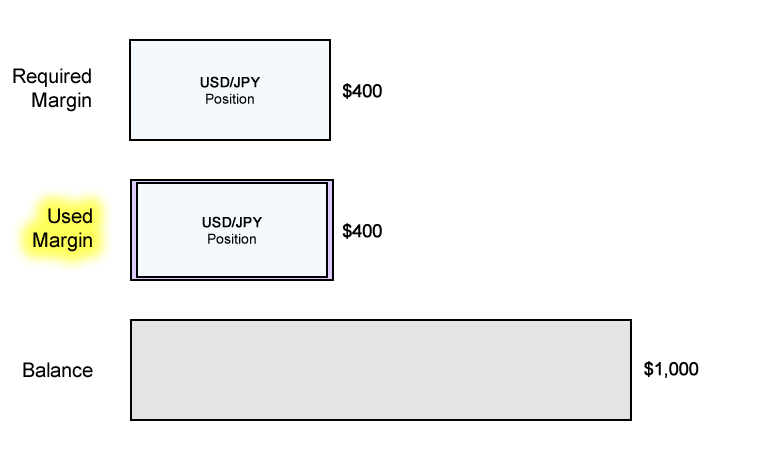
There are no other trades open than the one we just entered.
Because we only have one open position, the Used Margin will be the same as the Required Margin.
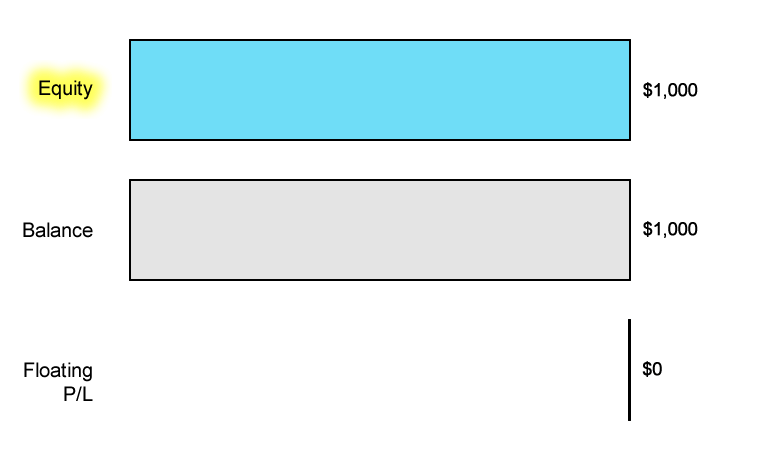
Step 3: Calculate Equity
Assume the price has shifted marginally in your favor and your position is now at breakeven.
This means your Floating P/L is zero.
Let’s figure out the equity:
Equity = Account Balance + Floating Profits (or Losses)
$1,000 = $1,000 + $0
The Equity in your account is now $1,000.
Step 4: Calculate Margin Level
We can calculate the Margin Level now that we know the Equity:
Margin Level = (Equity / Used Margin) x 100%
250% = ($1,000 / $400) x 100% The Margin Level is 250%.
Most trading systems will not enable you to open new trades if your Margin Level is less than 100%.
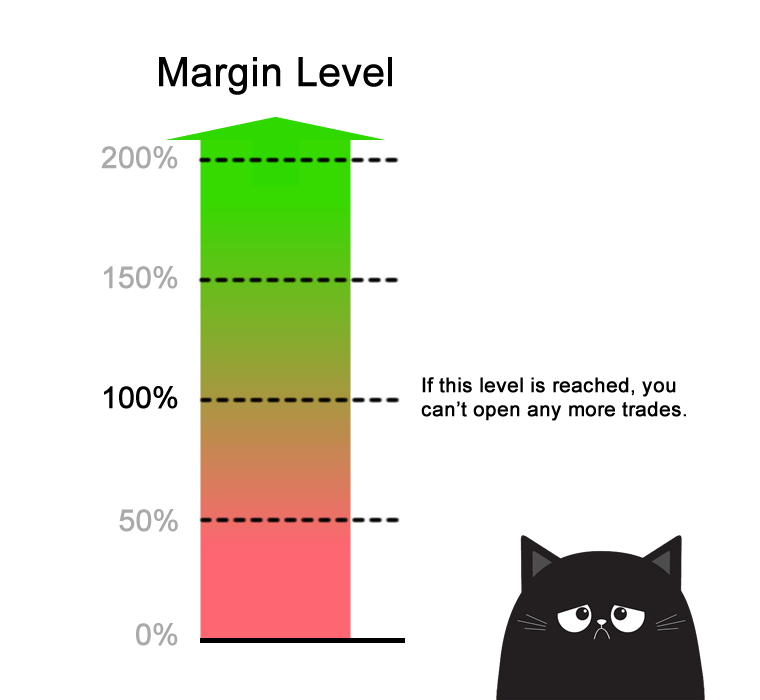
In this case, because your current Margin Level is 250%, which is significantly more than 100%, you will be able to open additional trades.
Consider the Margin Level to be a traffic light.
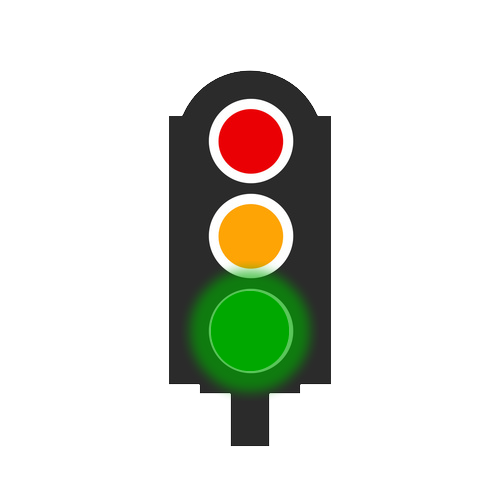
As long as the Margin Level is greater than 100%, your account has the “green light” to open new trades.
Next Lesson: What is a Margin Call?